

Akbota Alaguzova

Akbota Alaguzova
Chief Executive Officer of SmArt.Point
A senior executive with expertise in the financial and operational management of commercial real estate. Began her career in the Big 4, focusing on financial analysis, controlling, and audit. Continued her professional journey at Mercury Properties — the parent company of SmArt.Point — where she was responsible for the development of the business center division and the management of a portfolio of more than 20 properties. At SmArt.Point, she leads operational management and the strategic development of coworking spaces. Her work is focused on building sustainable business models, improving asset efficiency, and fostering professional communities as a key driver of resident growth.
How Tenant and Buyer Behavior Is Changing: Key Developments in the Commercial Real Estate Market
A few years ago, the key question tenants asked was simple: “What is the price per square meter?” Today, this question is almost never the first one raised.
The commercial real estate market — from shopping malls to office spaces — is entering a new phase where value matters more than square footage, and the environment matters more than location. This shift directly affects both tenant behavior and the expectations of end users.
Tenants no longer simply “rent space” — they choose an ecosystem
One of the most noticeable changes in recent years is the transformation of tenant decision-making. Where businesses once selected properties based on “foot traffic + price,” new criteria are now becoming increasingly important:
- who my neighbors will be;
- what audience is already present within the space;
- whether there is life beyond working hours;
- whether the location supports business growth rather than simply providing an address.
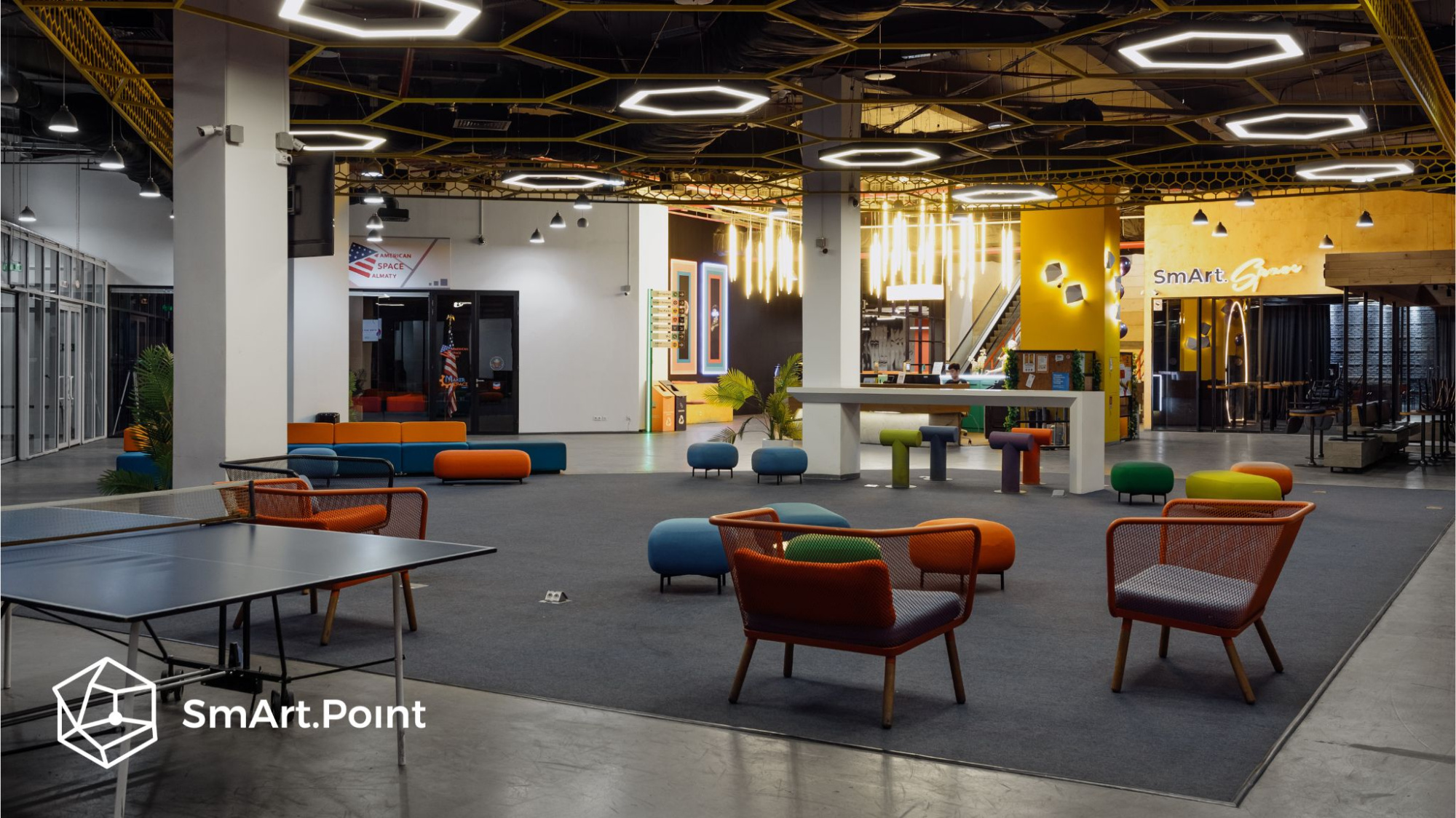
This is particularly evident in the case of SmArt.Point. Today, the core of the SmArt.Point resident community consists of IT companies, representing more than 40% of all tenants. Marketing and consulting agencies, logistics firms, e-commerce businesses, media companies, professional services, and creative industries are also strongly represented.
Many residents note that the decisive factor in choosing a workspace is no longer the size or furniture, but the environment itself — infrastructure, professional networks, community, and opportunities for collaboration.
One illustrative case is a small product-focused IT team that, within their first year of residency, attracted an investor and secured their first clients thanks to the professional community and participation in internal networking events. In their case, the office became not a cost, but a growth platform.
Consumers and end users have become more selective and “emotion-driven”
The behavior of end users is changing as well — whether they are visitors of shopping centers, café guests, or residents of business spaces.
Today’s customer:
- takes longer to make decisions;
- values experience as much as the product itself;
- expects service and meaning, not simply an offer.
This is especially visible in hybrid environments where work, leisure, and services intersect. People no longer come just “for coffee” or “to the office,” but for a full-day scenario: to work, meet, attend an event, and stay for networking.
At SmArt.Point, office infrastructure is increasingly used beyond traditional work routines: morning lectures, evening events, partner meetups, and community gatherings. Space is no longer a backdrop — it becomes an active participant in interaction.
Tenants expect flexibility — not only in contracts, but in mindset
Another major shift is the demand for flexibility. This is not only about lease terms or expansion options, but also about the willingness of property managers to adapt to business needs.
Companies want:
- the ability to scale up or down quickly;
- to change their format of presence;
- to test new products and teams without long-term commitments.
In essence, commercial real estate is increasingly viewed as a service rather than a fixed asset. Those projects that understand this will benefit in the long run.
What does this mean for the market overall?
We are witnessing a transition from a “leasing square meters” model to one focused on building environments. The winners are the projects that:
- understand their audience;
- work with communities, not only contracts;
- offer tenants not just space, but opportunities.
That is why concepts such as mixed-use formats, all-in-one solutions, community-driven approaches, and ecosystems are becoming more prominent. This is not a trend for the sake of trend — it is a direct response to real changes in business and consumer behavior.