

Back
According to the company, its future business strategy in Kazakhstan will focus on partnerships with retailers and e-commerce platforms. This approach is expected to expand the brand's geographic reach without the need to operate its own brick-and-mortar stores.
VkusVill also noted that further business expansion requires a broader product assortment, which is currently difficult to achieve while maintaining the company's existing standards for product quality and ingredients.
Customers participating in the loyalty program will automatically receive refunds for the unused portion of their club card memberships.
VkusVill entered the Kazakh market two years ago. During that time, the company developed local production and increased the share of Kazakhstan-made products sold under its private label to 30% in several categories, including dairy products, bakery items, ready-to-eat meals, vegetables, and fruit.
Even before opening its own stores, the retailer had begun expanding through partnership sales channels. VkusVill products are available at Q-Store outlets located at Gazpromneft filling stations, in the Kinopark cinema chain, as well as on selected online marketplaces and through retail partners.
VkusVill's transition to a partnership-based model reflects a broader retail trend, with companies increasingly combining online sales channels, marketplaces, and collaborations with established retail networks instead of aggressively expanding their own physical store chains. This strategy helps reduce operating costs while maintaining market presence through a more flexible sales model.
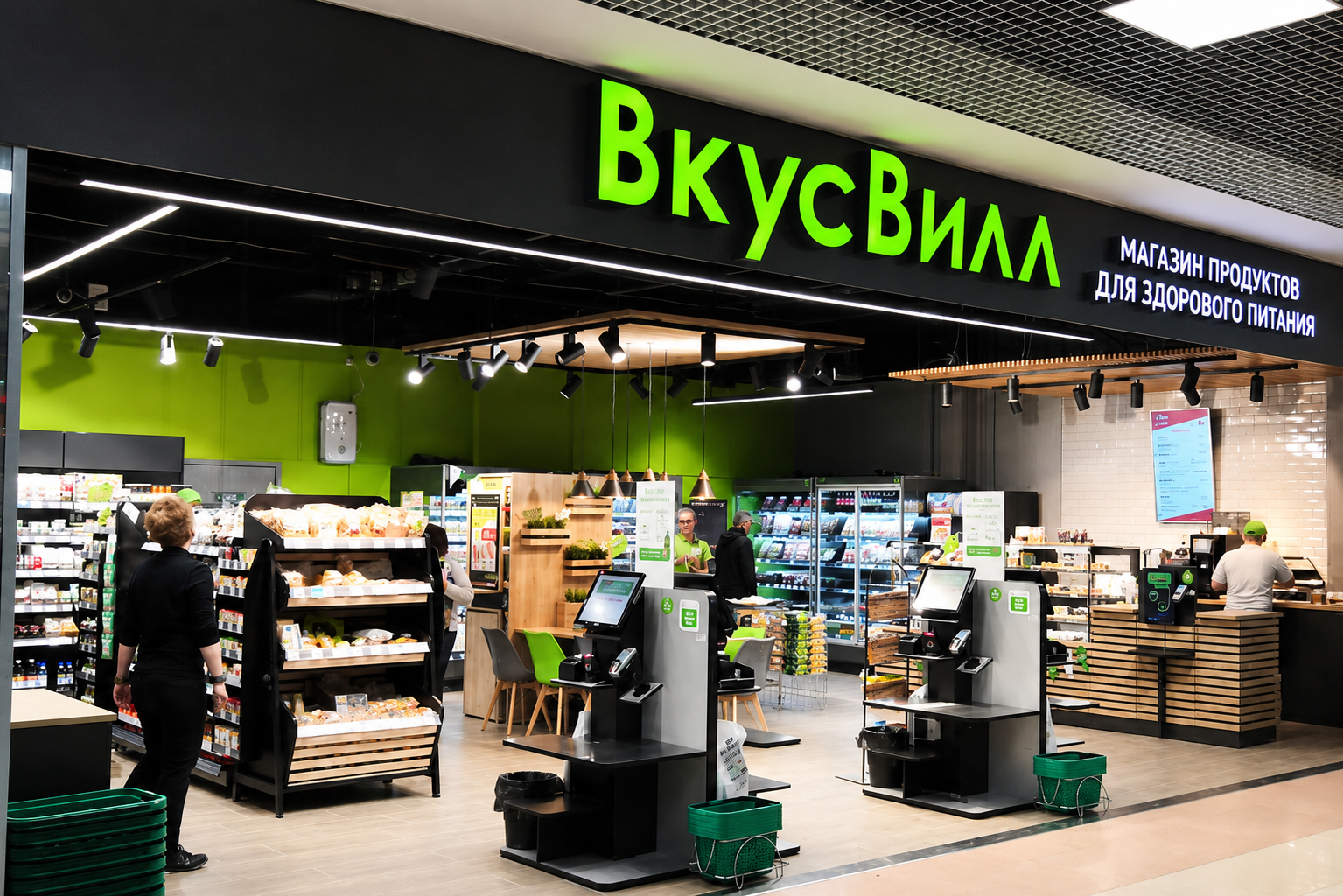
Russian retail chain VkusVill announces closure of its stores in Kazakhstan
Russian food retailer VkusVill has announced the closure of all of its stores in Kazakhstan. The last day of operation for its retail outlets will be August 9, 2026.
The company said the decision is part of a broader review of its development strategy in the Kazakh market. However, the brand is not leaving the country entirely — its products will continue to be available through online marketplaces and partner retail chains.
A shift in market presence
According to the company, its future business strategy in Kazakhstan will focus on partnerships with retailers and e-commerce platforms. This approach is expected to expand the brand's geographic reach without the need to operate its own brick-and-mortar stores.
VkusVill also noted that further business expansion requires a broader product assortment, which is currently difficult to achieve while maintaining the company's existing standards for product quality and ingredients.
Customers participating in the loyalty program will automatically receive refunds for the unused portion of their club card memberships.
Two years in the Kazakh market
VkusVill entered the Kazakh market two years ago. During that time, the company developed local production and increased the share of Kazakhstan-made products sold under its private label to 30% in several categories, including dairy products, bakery items, ready-to-eat meals, vegetables, and fruit.
Even before opening its own stores, the retailer had begun expanding through partnership sales channels. VkusVill products are available at Q-Store outlets located at Gazpromneft filling stations, in the Kinopark cinema chain, as well as on selected online marketplaces and through retail partners.
Growing trend toward omnichannel retail
VkusVill's transition to a partnership-based model reflects a broader retail trend, with companies increasingly combining online sales channels, marketplaces, and collaborations with established retail networks instead of aggressively expanding their own physical store chains. This strategy helps reduce operating costs while maintaining market presence through a more flexible sales model.