

Stores are gearing up for new inspections and possible fines
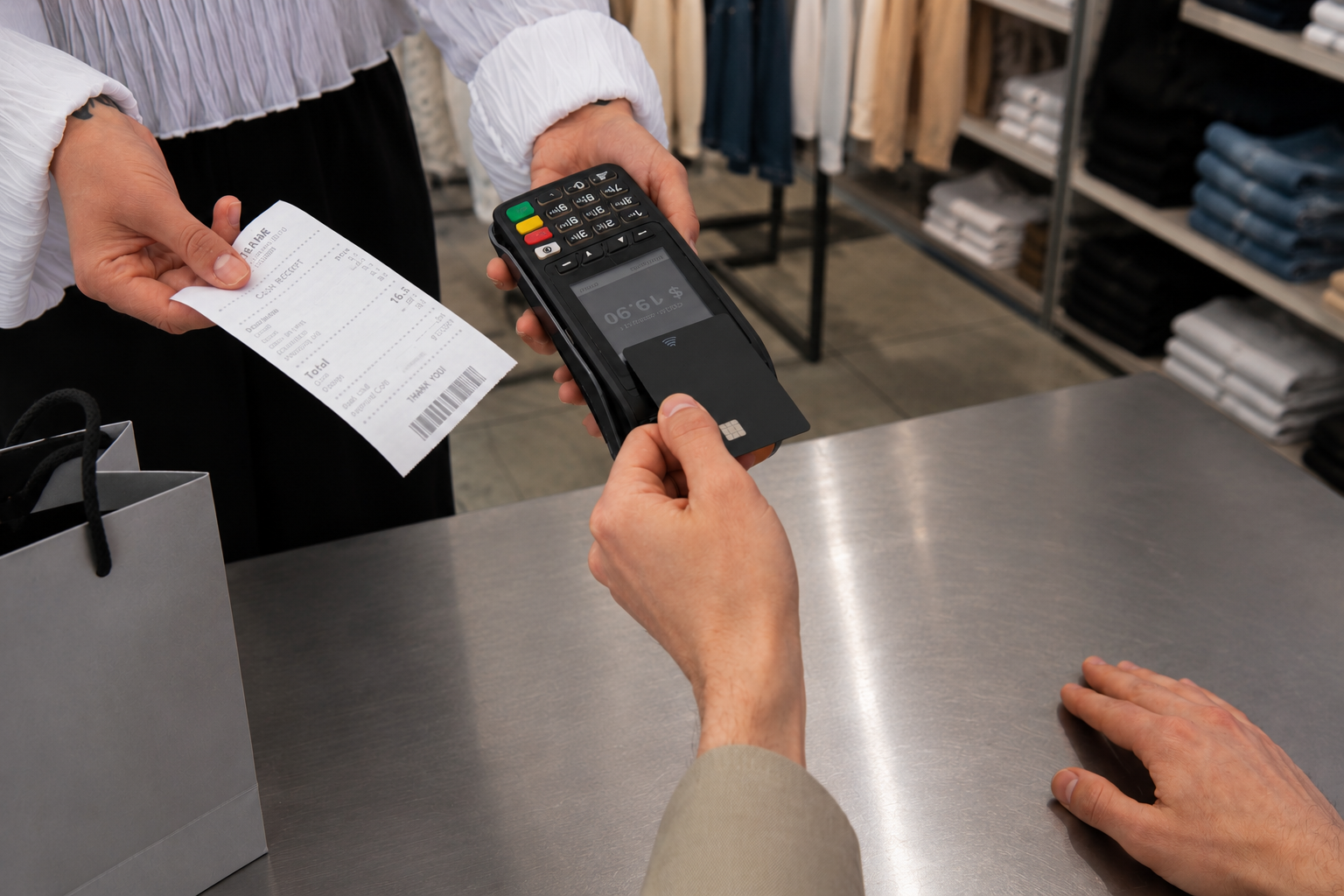
Control over compliance with requirements for cash register machines (CCMs) is being tightened in Kazakhstan, reports Inbusiness.kz. Businesses are required to issue receipts to customers for both cash and bank card payments. Violations are subject to fines, which in 2026 may reach KZT 216,300.
Under tax legislation, businesses must use CCMs capable of recording and transmitting data. The cash register models in use must be included in the state register.
At the same time, businesses may use not only standard cash registers, but also software-based or integrated cash register systems. An exception applies to certain remote locations where telecommunications networks and internet access are unavailable. In such cases, CCMs without online data transmission capabilities may be used.
One of the key requirements remains the mandatory issuance of a receipt for the actual amount paid. At the customer's request, the receipt must also include their Individual Identification Number (IIN) or Business Identification Number (BIN).
What Fines Are Imposed for Violations
For a first violation, a business may receive a warning. However, financial penalties apply if the violation is repeated within a year.
Failure to use a CCM, as well as the use of a malfunctioning or unregistered cash register, is subject to a fine of 30 to 50 MCI, or KZT 129,750 to KZT 216,250 in 2026.
Failure to issue a receipt or issuing a receipt with an incorrect amount is subject to a fine of 20 to 40 MCI, or KZT 86,500 to KZT 173,000.
Thus, failure to issue a receipt or errors in its preparation can result in significant financial losses for businesses.
Controls Apply to Both Cash and Cashless Payments
The receipt requirement applies regardless of the payment method — it covers both cash transactions and payments made by bank card.
For businesses, this means they need to monitor not only the condition of their cash register equipment but also the accuracy of its operation with payment systems.
If businesses have questions regarding CCM upgrades or updating receipt details, they are advised to contact cash register maintenance service centers or the support services of fiscal data operators.
Consumers also have a mechanism for protecting their rights. If a retail outlet refuses to issue a receipt, the customer can file a complaint with the state revenue authorities at the location of the business.
CCMs and POS Terminals to Be Integrated
Another area of change involves the integration of cash register equipment with payment infrastructure. Kazakhstan is implementing a plan to integrate online CCMs with POS terminals.
According to the State Revenue Committee, more than 1.2 million CCMs are currently operating in the country, around 96% of which are online cash registers.
The integration makes it possible to combine the functions of CCMs, POS terminals, and equipment used to scan barcodes from the National Catalogue of Goods and labeled products. Some models already support a unified operating mode and can reflect payment information in a single cash receipt.
In addition, the State Revenue Committee is launching a pilot project under which fiscal receipts generated through CCMs will be transmitted directly to the tax authorities. The initiative is expected to help reduce businesses' operational costs.