

Investors Plan to Invest $1.65 Billion in Central Asian Warehouses
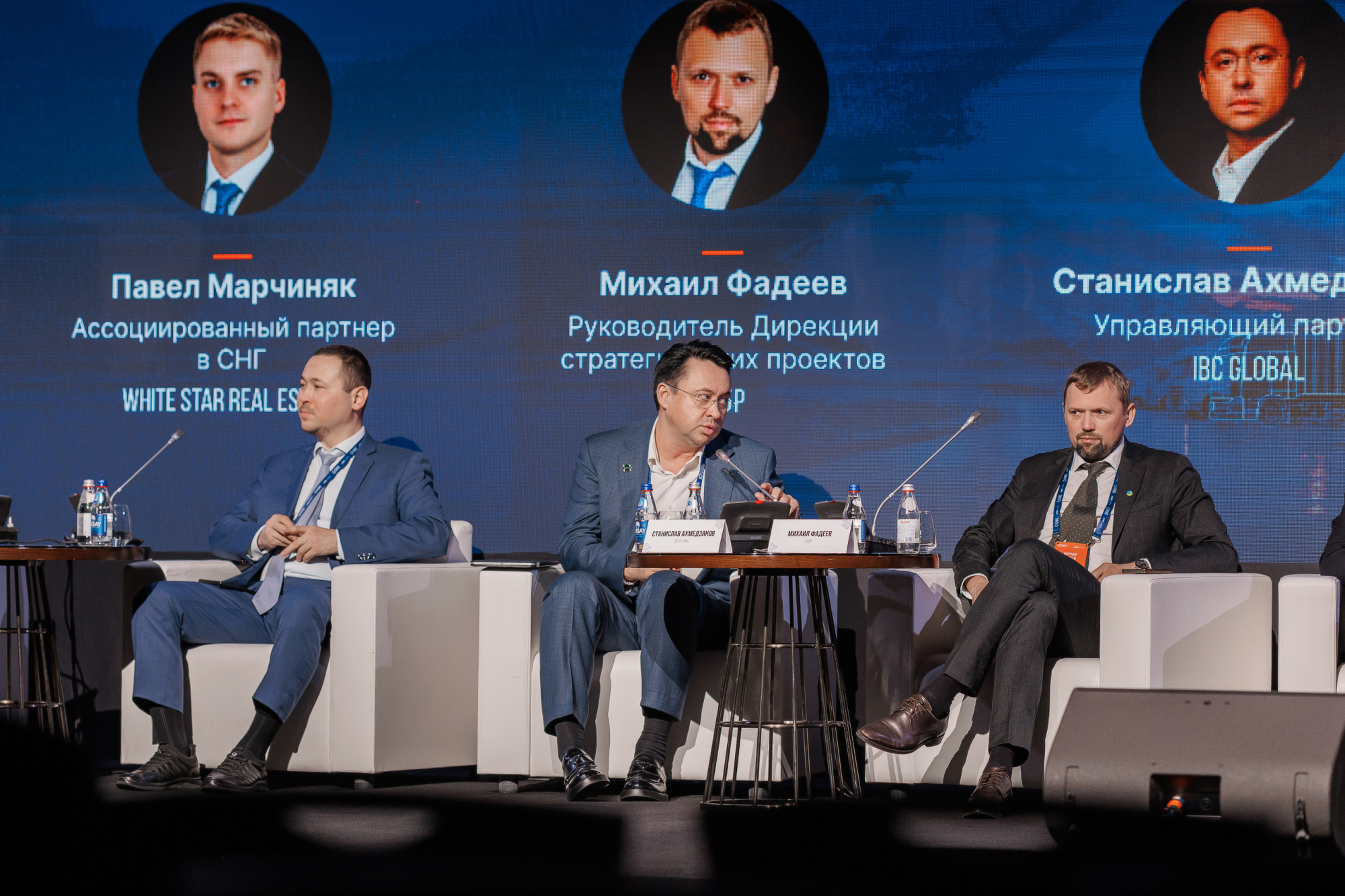
Four private equity funds have announced plans to invest in warehouse and logistics real estate in Central Asia. Including the Eurasian Development Bank (EDB) program, the total announced financing volume amounts to approximately $1.65 billion, according to IBC Global, following the “Financing Warehouse Real Estate Projects” session held as part of the international Central Asia Warehouse Summit (CAWS) in Almaty on October 15.
Central Eurasia Warehouses Private Equity Fund, two undisclosed specialized European funds, and the EDB fund have announced plans to operate in the region. Investors are considering acquisitions of existing warehouse complexes as well as participation in new construction projects. Investment timelines and stages of capital formation vary across the funds.
“Two European funds have announced a combined $400 million available for investment and are already identifying existing properties and construction projects. Central Eurasia Warehouses Private Equity Fund is raising $250 million in investment capital. This brings the announced capital of the three funds to approximately $650 million. The funds offer developers several capital-raising options, ranging from construction financing to purchasing a property upon completion or once it reaches stabilization. Selling an operating warehouse allows a developer to lock in profits and redirect the proceeds into the next project,” explained Stanislav Akhmedzyanov, Partner at Central Eurasia Warehouses Private Equity Fund.
“Bringing a fund on board at the development stage helps establish a clear financial plan for construction, reduce risks, and simplify the eventual exit from the asset. For the Central Asian market, this is an important step toward creating sustained investment demand for high-quality warehouse real estate,” he added.
According to IBC Global, the emergence of specialized investors expands financing opportunities for warehouse construction across the region. Their capital could provide an additional source of funding for developers facing high bank borrowing costs and restrictions on project financing.
Investors’ priorities include Class A warehouse complexes and comparable high-quality properties, generally ranging from 20,000 to 25,000 square meters or more. Requirements regarding location, construction stage, and tenant mix vary according to each fund’s strategy. Investment interest extends to operating facilities generating rental income, institutional-grade development projects, and infrastructure along international transport corridors.
“We assess a logistics property by its role in the supply chain: which cargo flows it serves, who its customers will be, and how sustainable that demand is. Distribution warehouses, terminals, and customs infrastructure are in demand along transport corridors. Location, the facility’s function, and transportation economics are all important factors in making an investment decision,” noted Mikheil Nibladze, Senior Investment Advisor at Cerberus Frontier.
The Eurasian Development Bank (EDB) is developing another avenue for financing warehouse infrastructure in the region. It is already involved in projects by Griffin Partners, Mercury Properties, and other companies in Kazakhstan. In August 2026, the bank signed a loan agreement for the first phase of construction of Griffin Logopark Almaty. The complex will have a total area of approximately 125,500 square meters, with project investments estimated at around $125 million. In July, the EDB and Mercury Properties signed a memorandum on the development of the second phase of Mercury Logistics in the Almaty Region. Investment in the first phase amounted to KZT 20 billion, while total investment is expected to reach KZT 70 billion by 2031.
“Logistics infrastructure is one of the EDB’s priority areas because its development promotes trade growth and strengthens trade and economic ties between Central Asian countries and neighboring states. Our estimates indicate that a structural shortage of modern warehouse space creates significant potential for new projects. By 2031, we plan to allocate up to $1 billion to the development of warehouse infrastructure in the region and facilitate the creation of more than 1 million square meters of warehouse space. Our goal is not only to provide financing but also to support the development of high-quality projects, attract international expertise, and create conditions for the long-term development of Central Asia’s warehouse market,” said Mikhail Fadeev, Head of the EDB’s Strategic Projects Directorate.
According to IBC Global, the announced investment programs will cover only part of Central Asia’s demand for modern warehouse and industrial logistics infrastructure. The scale of further investment will depend on demand, market financing conditions, the balance between domestic and foreign investors, and geopolitical factors.
“We do not see a risk of oversupply over this time horizon,” said Adrien Henni, Vice President for Finance and International Development at IBC Global.
“According to IBC Global’s analytical models, Kazakhstan, Uzbekistan, Kyrgyzstan, and Tajikistan will collectively require 7–11 million square meters of new warehouse space over the next ten years. This estimate includes distribution warehouses, agrologistics facilities, and multi-temperature complexes. Based on the announced capital and the proposed financing model, with a 60% share of debt financing, the funds could support the construction of approximately 1.8 million square meters, or around a quarter of the region’s total requirement. Taking into account the plans of the EDB and other investors, this figure could reach 2.8 million square meters.
“Consequently, additional financing will be required for approximately 4.2–8.2 million square meters of warehouse space to meet the demand for high-quality warehouse infrastructure. These calculations demonstrate that the market continues to have substantial capital requirements for development. At the same time, there are currently fewer institutional-grade projects available in the region than there is capital seeking investment opportunities.”