

What is holding back the development of the logistics market in Uzbekistan
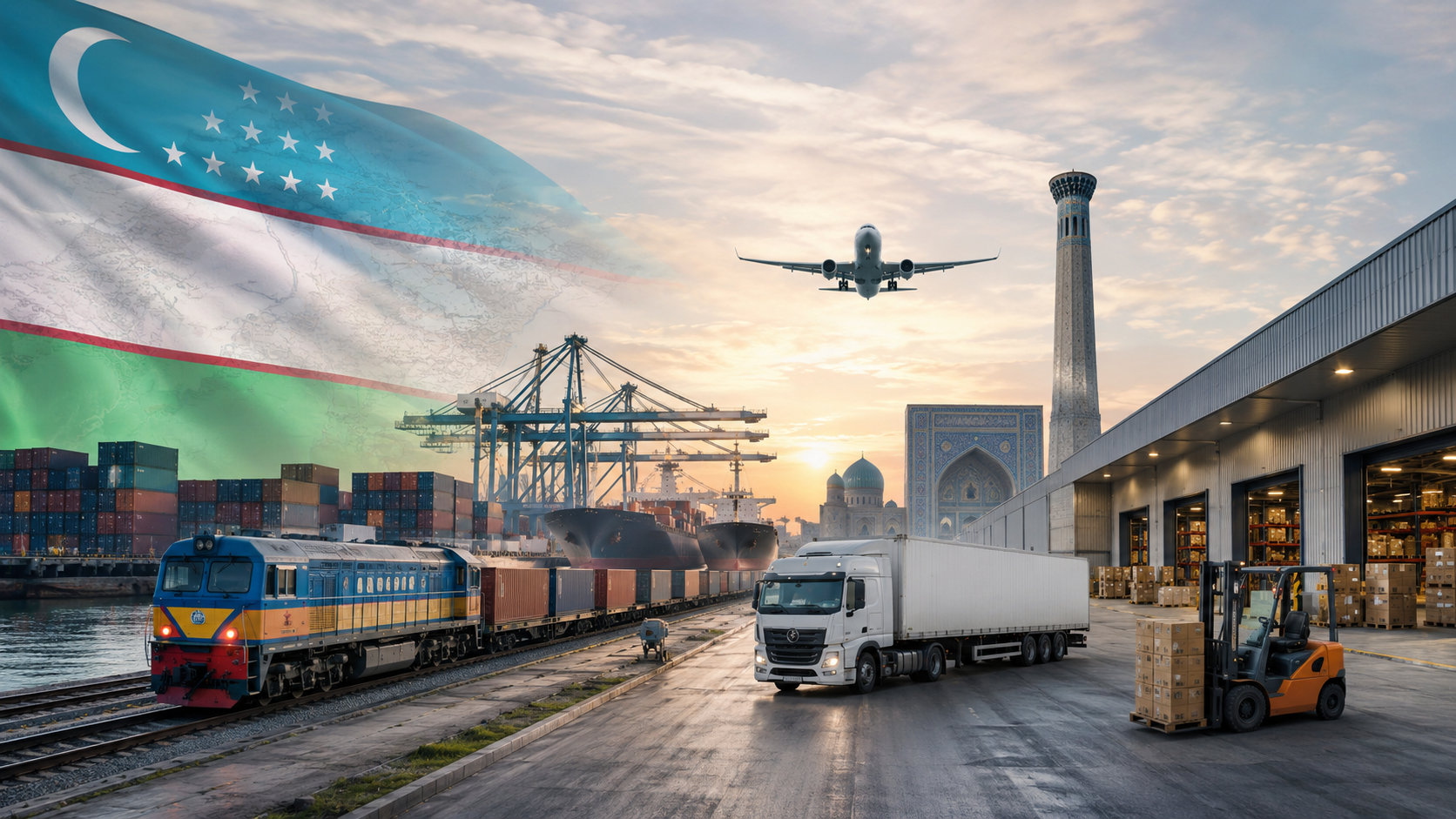
Insufficient digitalization and a lack of modern warehouses remain the main barriers for businesses, according to experts.
From 2022 to 2025, Uzbekistan’s foreign trade turnover increased by more than 60% — from $50 billion to $81.2 billion. As cargo flows grow, the pressure on logistics is also increasing. At the same time, some logistics companies still operate without a unified system: orders are received via phone calls and messengers, data is managed in a fragmented way, and shipment tracking often requires manual work. This was reported by Farid Vakhidov, Director of the ATI.SU representative office in Uzbekistan, at the LogiTrends Uzbekistan 2026 conference, according to Spot.
“In the context of growing freight volumes, the use of digital technologies by market participants is no longer a competitive advantage but a necessity. Digital platforms are becoming an integral part of the logistics chain for quickly finding cargo, efficiently utilizing transport, and reducing costs,” said Farid Vakhidov.
Among the key directions for Uzbekistan, market participants highlighted the Trans-Caspian International Transport Route, the Uzbekistan–Kazakhstan–Russia–Europe and Uzbekistan–Kyrgyzstan–China corridors, the southern route via Turkmenistan and Iran with access to the Bandar Abbas and Chabahar ports, as well as the Trans-Afghan corridor through Afghanistan to the Pakistani ports of Karachi and Gwadar.
At the same time, businesses continue to face a number of challenges — geopolitical risks on certain segments of the routes, insufficient digitalization of customs and transport procedures, and the need for further development of modern logistics infrastructure.
“For the further realization of Uzbekistan’s potential as a regional transport and logistics hub, we believe it is necessary to accelerate the implementation of railway construction projects, primarily in the directions of China and South Asia. It is also important to introduce a unified digital window for interaction between carriers, customs authorities, and other participants in foreign trade activities of countries located along transport corridors, and to continue developing logistics hubs, multimodal terminals, and supporting transport infrastructure in the country,” said Azizkhan Khaitbaev, Head of the Transport and Logistics Department at the Ministry of Investment, Industry and Trade.
A representative of the Chamber of Commerce and Industry, Azamat Isaev, noted that without efficient logistics, exporters find it harder to compete in foreign markets: it affects delivery speed, final product cost, trust from foreign buyers, and access to new markets. Among the main barriers he mentioned high transportation costs, lack of return loads, long delivery times, customs and documentation barriers, and insufficient warehouse infrastructure.
Experts agreed that the further development of logistics in Uzbekistan depends not only on digital solutions and transport corridors, but also on the quality of logistics processes. Key conditions include cargo security, training qualified personnel, and developing modern warehouse infrastructure, including Class A warehouses.