

How Big Data Insights Helped Generate 2 Billion Tenge in Revenue. The Dostyk Plaza Case

In March 2025, foot traffic at the Dostyk Plaza shopping and entertainment center dropped noticeably. A data-driven strategy and a revamped mobile app helped bring back 100,000 customers and generate 2 billion tenge in additional revenue. This case earned two awards at the international E+ Awards Central Asia 2026.
Digital Business explored why the option to skip parking fees works better than discounts, how to turn a one-off mall visit into a managed lifecycle, and why high foot traffic isn’t what matters most.
How to turn a loyalty app into a data product
The first version of the Smart Plaza app launched 7 years ago. In 2025, the team at TSPM — which manages the Dostyk Plaza and Shymkent Plaza shopping and entertainment centers and the Eurasia mall — completely relaunched the mobile app. By combining Big Data, digital communications, and a loyalty program, they built a closed-loop audience management system.
The transformation solved a common problem: a mall’s mobile app is usually a product people use only if they happen to remember it. Or they download it for a one-time bonus, claim it, and delete it right away. Dostyk Plaza bet on retention and personalization grounded in analytics, turning the mobile app into the hub of an ecosystem for attracting and retaining customers. And they didn’t stop there — the team continually tests hypotheses on narrow audience segments, measures the response, and keeps only the mechanics that genuinely drive revenue. As a result, Smart Plaza’s uninstall rate is under 1%.
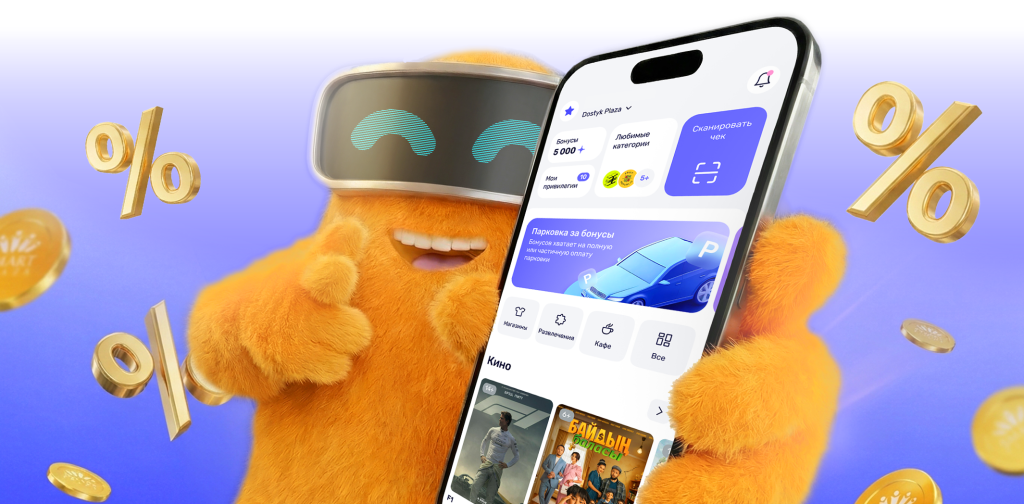
Today the product has more than 20,000 active users, and monthly engagement (MAU) exceeds 40%.
“Loyal customers visit Dostyk Plaza an average of 4 times a month, whereas international industry benchmarks are typically around 2–3 visits a month,” says Nadezhda Ryazantseva, CMO and Customer Experience Strategist at TSPM. “We analyze how guests behave in the app: how often they log in, how much time they spend, which sections they visit. An important marker is exactly which coupons and ‘shopper tokens’ (an internal currency earned by scanning receipts) a person buys and activates, and which store categories they prefer. This lets us understand the customer, study their habits, and use that information to offer a personalized experience. So if someone frequently visits a particular coffee shop, we can tell them about a promotion there specifically.”

The company controls the frequency and relevance of its touchpoints with guests, using a range of communication channels — fr om email campaigns to push notifications. Each segment gets its own channels and contact frequency. On average, that’s 3 personalized offers a month: dining or entertainment, fashion/beauty, and image-building events — for example, activities for New Year or Nauryz.
How data helps find “your” customers
Analyzing data from open sources helped the team understand the market potential and target audience of Dostyk Plaza. It’s the “middle class / upper-middle” segment — about 11% of the population in Almaty. Attracting irrelevant guests and generating inflated but ineffective traffic doesn’t pay off. To find “their” customers, the marketing team uses predictive analytics — studying the habits of regular shoppers to find people with similar interests. The data helps pinpoint which parts of the city this audience frequents most, and outdoor advertising is then placed there. Both offline and digital campaigns are built on the same principles.
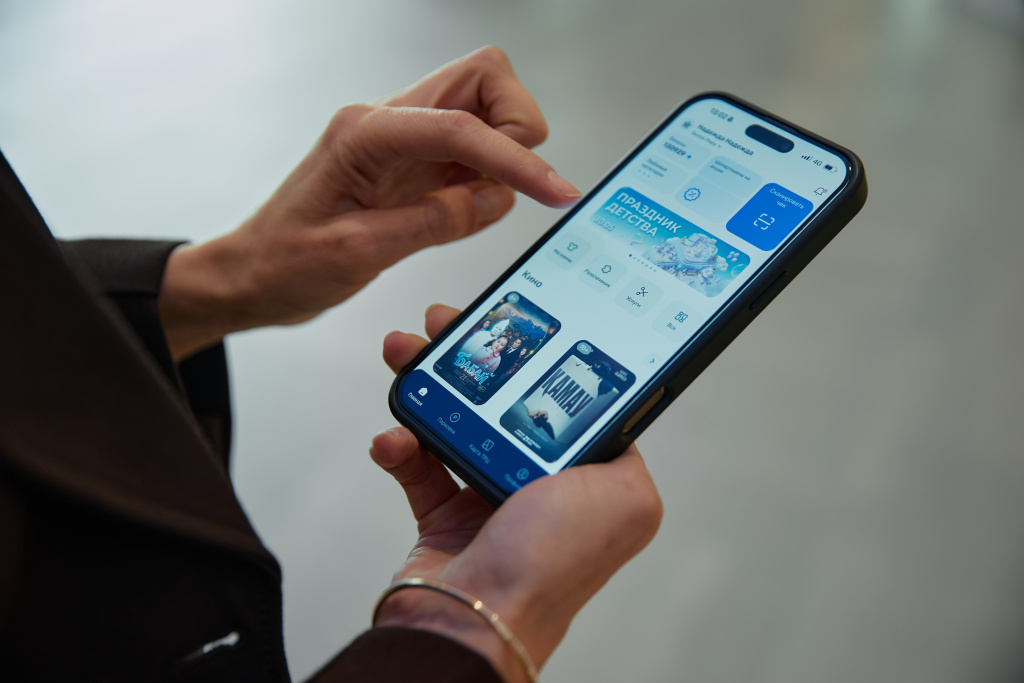
The Smart Plaza app is a tool not only for mall guests; it works as a hybrid B2B2C ecosystem. On one side, convenience for the customer; on the other, information for tenants.
“To meet the needs of these two completely different segments, we process a large volume of data from offline and online. We share detailed analytics with our partners, our tenants: how many guests visit the center, how many of all that traffic are a specific store’s customers, and who those guests are. To maintain constant access to the data, we invite tenants to become partners in the loyalty program within the mobile app. Within 3–4 weeks of launching joint promotions in Smart Plaza, most tenants see their average check and visit frequency grow. This sparks interest among the others, and inbound demand to join the loyalty program rises,” Nadezhda explains.
Discounts hurt, parking sells
One of the key data-driven insights is that the steady, loyal audience comes to the mall not for sales but for comfort and service. According to Nadezhda, mass discounts are an instant fix that doesn’t work in the long run. Personalization and service features, on the other hand, are tools for building loyalty and retaining the target audience.
“As soon as the concentration of guests in the mall rises during sale season, there’s a spike in negative reviews. That clearly shows people come to us for comfort and high-quality service. So a 5% increase in quality traffic is better than 50% of irrelevant traffic,” Nadezhda Ryazantseva explains.
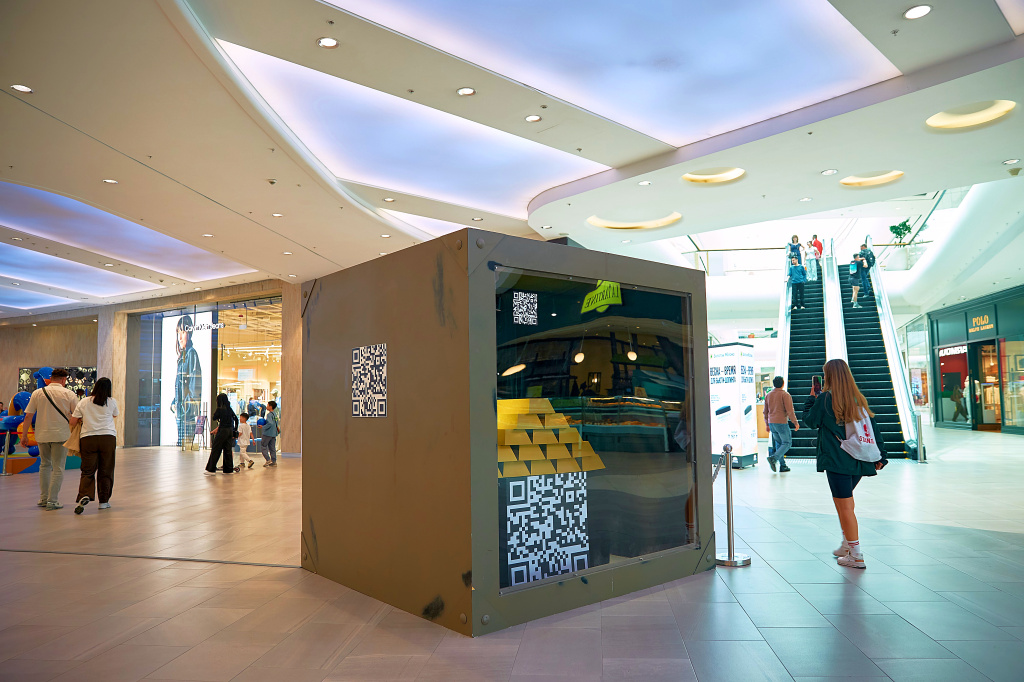
Another insight uncovered through the analysis of data and reviews: what motivates guests to download the app is parking-fee perks. To get favorable terms, there are “shopper tokens” — the app’s equivalent of coupons, available to all mall guests.
Why 5% of new features “don’t take off”
Marketing is handled by an in-house team. Working with their own resources lets them keep expertise in-house, ensure data security, react faster to market changes, and adapt campaigns and products.
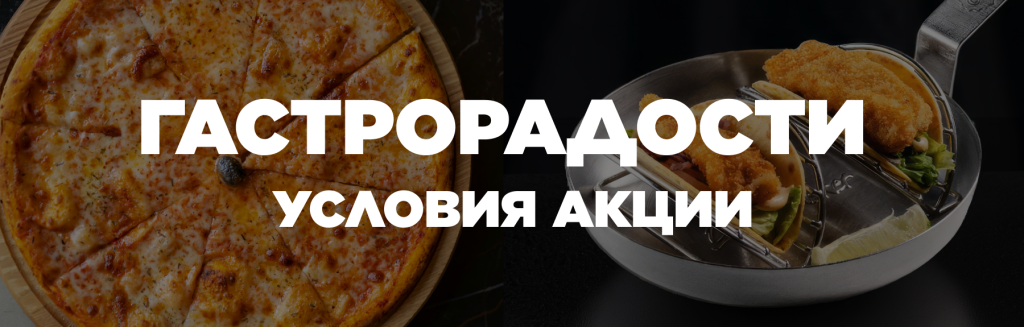
Things don’t always go smoothly — statistically, about 5% of new features “don’t take off.” For instance, the “Gastro Delights” promotion was launched for restaurant and café guests. To earn the bonus, users had to complete several sequential steps, but in practice that scenario proved too complicated for users.
“At the concept stage it seemed like a wow solution to us. But we soon realized guests weren’t showing interest in the offer. We started analyzing and found that the customer journey was too long. We optimized the mechanics of the offer, made it simpler — and the conversion rate took off,” Nadezhda shares.

During the “Shopping Therapy” promotion, there was a surge in activations — users registered receipts of 15,000 tenge or more in the app and received coupons to enter a draw for gold and shopping gift certificates. At one point the team faced a peak influx of customers; some receipts wouldn’t load or didn’t pass moderation, which caused frustration. They handled the disruptions 24/7: the front office took complaints in the app, at reception, on 2GIS, and on social media, while the backend simultaneously fixed receipt moderation inside the system.
Why a Kazakhstani case won an international award
O2O (offline to online — a model for winning back and retaining audiences) made it possible, in just six months of systematic work, to find the bottleneck, identify the causes of churn, build a retention funnel, and bring back to the mall half of the guests who had left — about 100,000 people. By the company’s estimates, this generated tenants around 2 billion tenge in turnover.
The company presented this case at the international E+ Awards marketing awards, held since 2023.

“In Central Asia, this is the first case wh ere fashion offline retail took silver in the ‘Loyalty Programs’ category and bronze for ‘Best Use of Technology’ at the E+ Awards,” Nadezhda notes. “I’m proud that in the TOP 5 we competed with global FMCG and IT brands such as Yandex and Mars. We built our work at the intersection of offline purchases and online analytics, which is still rare for Kazakhstani retail, and achieved this result in six months.”
Today, Smart Plaza unites services, loyalty programs, and guest interactions into a single ecosystem. The next stage is rolling out a personal AI assistant.
“When a guest struggles to find the product they need, they get tired, their mood drops, and the shopping trip ends,” notes Nadezhda Ryazantseva. “What’s more, there’s a chance the person won’t come back. In a situation like that, a mobile app with AI features can become a real helper in your pocket. For example, you type: I need a gift for my mom for 15,000 tenge — and the assistant gives you several specific suggestions and a route to your goal.”